
Magnificent
DOCUMENTARY – SHORTS
Donations help us keep entries free for UK’s marginalised filmmakers, charities and filmmakers from Ukraine.
It also helps us keep the screenings free of cost for millions of viewers from across the world.
Damian Trapp
In the middle of the German city of Leipzig lies Europe’s oldest botanical garden, which is the exhibition space for a series of sculptures that fuse scientific research and artistic ingenuity to create art pieces that can be enjoyed by humans, animals, and nature. This documentary illuminates the creative processes of the artists and scientists involved, from inception to display.
Louise Camish
River’s Return is an 18-minute documentary celebrating community-led river restoration across the Uttlesford district in Essex. Written by Dr Tony Sampson (University of Essex Business School /The Cultural Engine Research Group) and produced by Jellyfielder Studios, the film is poetic, reflective, and meditative – structured around the metaphor of tributaries feeding a larger river, mirroring how individual community efforts gather into something collectively powerful. It follows three intertwined river stories: the Newport River Group restoring chalk streams on the River Cam, landscape-scale restoration at Audley End Estate, and the Rodings and West Essex Farm Cluster working along the River Roding through the Bluespaces Trout project, alongside contributions from grassroots River Champions on the Upper Chelmer.
Commissioned by: Uttlesford District Council (UDC)
Produced by: Jellyfielder Studios and The Documentary Co.
Creative / academic partner: The Cultural Engine Research Group/ Imaginarium – Dr Tony Sampson, University of Essex Business School
Community partner: Sustainable Uttlesford
Producer: Lu Camish
Stills photography: Low Light Baz
Featuring: Newport River Group, CURAT (Cam Upper Reaches Action Team), Audley End Estate, Rodings and West Essex Farm Cluster, Cam CatchmentPartnership, Thaxted River Champions, Essex Wildlife Trust, 2nd Newport Brownies, RSPB, Farming and Wildlife Advisory Group East.
Mehita Iqani
This vibrant short documentary celebrates the pleasure, creativity, and politics of wearing what already exists. Through the voices and style sensibilities of three fabulous fashionistas – Madinani, Jacky, and Philli – the film explores how second hand clothing can become a site of environmental activism, self-expression, and joy. In luminous studio scenes and textured glimpses of Lusaka’s bustling markets, garments take centre stage: sequined dresses, fur coats, linen trousers and colourful prints—each rescued, re-styled, and given new life. As the trio reflect on fashion’s emotional power and its environmental cost, they offer an alternative to throwaway culture: the care, playfulness, and material and ethical abundance that comes with choosing second-hand. Their conversations remind us that there are already enough beautiful clothes in the world, and that re-use is not about sacrifice but delight—an invitation to dress boldly while treading lightly. Through colour, texture, and thoughtful critique, the film shows how rejecting fast fashion and over-consumption of new clothing can be an act of imagination, connection, and hope.
Peter Carr
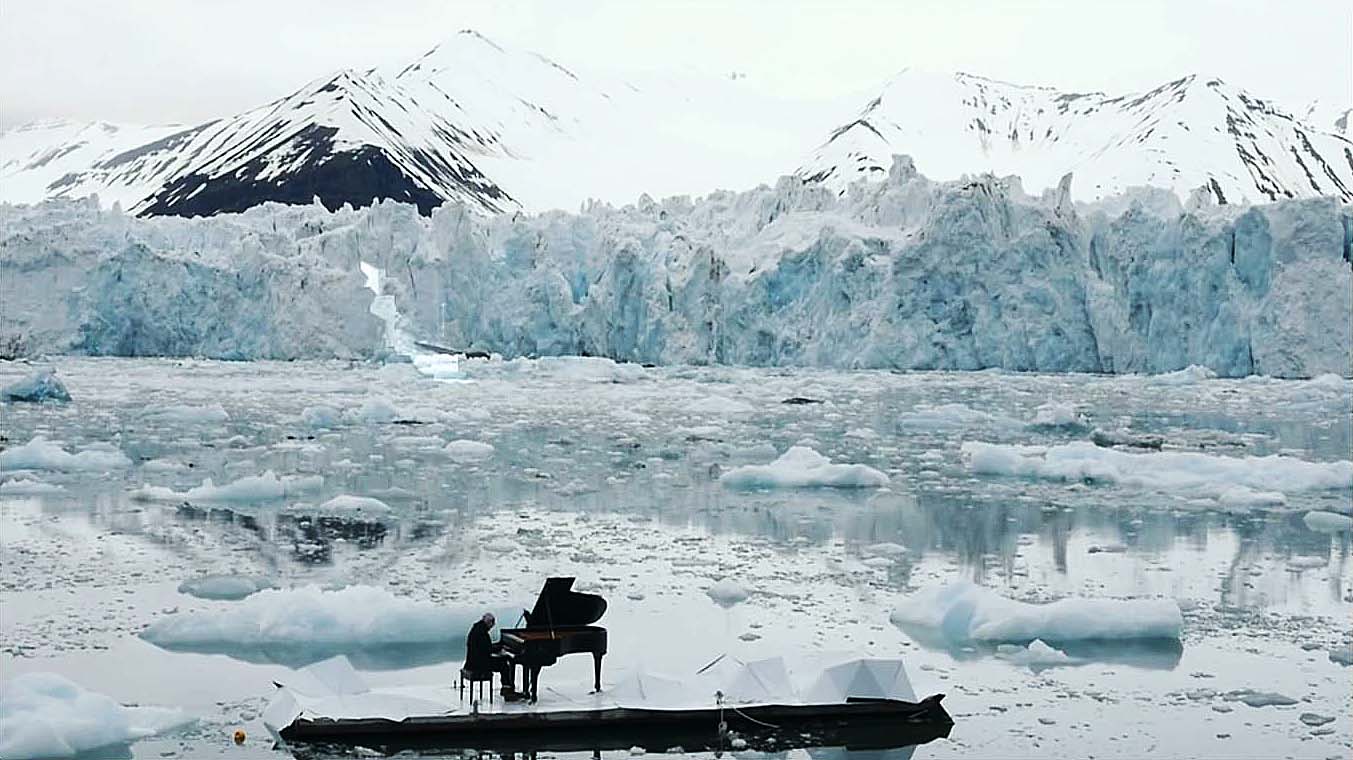
Following the success of Whale Wash, ESPA’s 2023 documentary about the Norwegian whaling industry, Endangered Species Protection Agency operators return to the Arctic to highlight the stark contrast in approaches to minke whales by different countries—one protecting them and another hunting them. By tracking vessels in Arctic waters and engaging with conservationists, the documentary examines how this exploited species is entangled in complex international debates.
Gustavo Carvalho
This animated documentary explores the origins of capoeira, its expression as a form of resistance during slavery in Brazil, and the ongoing fight against racism and for freedom. In parallel, the film follows the life of Professor Davidson Oliveira da Silva, whose mission is to preserve and share the traditions of capoeira and the rich culture of Pernambuco. Their journeys merge into a single narrative, celebrating identity, resilience, and cultural legacy.
Curie Park
For the local, by the local, with the local waste:
A story of empowering the locals and building plastic circular innovation systems in Nepal
Richard Wainwright
The trauma of war never truly goes away. For the former child soldiers of rebel warlord Joseph Kony’s Lord’s Resistance Army, the shock of abduction and unspeakable atrocities they witnessed left a lasting, scarring impact. But in the shadow of that brutal 20-year conflict in Northern Uganda, a remarkable story of resilience unfolds through the unexpected companionship of rescued dogs.
The Comfort Dogs of Uganda follows the lives of Lucy, Francis and Jennifer as they struggle with social stigma and severe PTSD. Alongside them are Sadik, Tommy and Ogen: rescued canines from The Comfort Dog Project (CDP) who themselves are overcoming abandonment and mistreatment.
This film follows the transformative bond between these fellow survivors as together they learn to trust, to love, and to reclaim their lives once more.
John Robert Lee j
The Wall is an intimate portrait of families living with the unseen weight of mental illness.
Through the voices of parents and children, the film explores how mental health struggles ripple through family life: a single father navigating borderline personality disorder while raising his young son; a mother supporting a partner through cycles of psychosis while protecting their daughters; and families shaped by trauma, grief, and survival. Their stories reveal moments of fear, confusion, and isolation but also unexpected tenderness, humour, and love.
At the centre of the film is a simple but powerful idea: the “wall” that families build around their feelings. In workshops and shared spaces, parents and children begin to break down that wall together, learning to speak about emotions that once felt impossible to name. Drawing, storytelling and conversation open pathways to understanding, allowing children to see their parents not only through the lens of illness, but through love, effort, and humanity.
The children’s perspectives bring a rare clarity to the film. A son helps his father navigate through his moments of brain fog. Daughters recall the day they saw their father again after months apart. In these small moments, the film reveals how children process complex realities with remarkable empathy and strength.
The Wall is ultimately a story about connection: about families learning that they are not alone, and that even in the darkest moments, love can begin to break through the barriers that silence creates.
Campbell McLean
One river speaks for all rivers as naturalist Ruud Kleinpaste journeys along New Zealand’s Ruamāhanga River, revealing the hidden web of life that connects water, land, wildlife and people—showing young people and farmers alike how we depend on rivers, just as rivers depend on us.
Tomasz Wierzbiański
This short film is about a project exploring the arts as a way to improve access to, and enjoyment of, landscapes and heritage sites for sight impaired visitors. It shares their journeys through Wakehurst Kew’s wild botanic garden, located in the heart of Sussex and home to the Millennium Seed Bank. It invites us all to think differently about landscapes and heritage.
Braden Smith
For millennia, the Meriam Nation people of the eastern Torres Strait have shared a deep spiritual and cultural connection with green turtles – an important totem woven into their identity, island custom and stewardship of their Sea Country.
Today, that connection is driving critical, science-based action to protect green turtles in the northern Great Barrier Reef, where rising sand temperatures and habitat loss due to climate change have led to low hatchling production and feminisation of hatchlings at key nesting sites, including at the world’s largest green turtle rookery – Raine Island.
To help safeguard green turtles for future generations, Meriam Nation Traditional Owners are working alongside scientists and government agencies through the Great Barrier Reef Green Turtle Research Program – collecting important information on the northern green turtle population to guide better management and conservation outcomes for this species going forward.
This project is one of five delivered under the Great Barrier Reef Green Turtle Research Program. It is being proudly delivered in partnership with the Meriam Nation Traditional Custodians of the eastern Torres Strait, as well as the Kuuku Ya’u Traditional Owners of the Portland Roads region, Cape York Peninsula. The program is funded through the Australian Government’s Reef Trust and implemented by the Reef Authority and the Department of the Environment, Tourism, Science and Innovation’s Queensland Parks and Wildlife Service.
Marianne Carney
A Derbyshire artist presents the sustainable art of willow weaving, where organic forms and creatures come to life using nature’s bounty, the willow tree.
Yilin Wang
At the pinnacle of Shangri-La, Haba Snow Mountain stands in silent grandeur at 5,396 meters. To the local people, it is a sacred peak, pure, inviolable, and never to be profaned.
When the cold steel of mining threatened to scar this holy land, the generations-old villagers made a choice that would define them. They refused the mines. They chose to carry their future on their own shoulders. Some became horsemen. Others became guides. Against the hardship of barren farming, they turned to tourism, not for fortune, but to feed their families while keeping faith with the mountain.
This five-minute documentary tells the story of those who stay behind. Ali, a guide who has walked these slopes for 20 years. A trekker who has returned for five. And the founder of a mountain club committed to sustainable travel. The film traces the quiet rhythm of their guardianship, each piece of waste picked up by a guide, carried down the winding trails on their backs, and finally burned in a proper pit at the mountain’s foot.
But the guardians face a new threat. Global warming is pushing the snow line higher, and the ecological wound deepens. An elderly climber, 75, says he wishes his ashes to merge with the snow after death, to become one with the mountain he loves.
The mountain shelters them. They guard the mountain in return.
This is not just a story about zero waste. It is a story of devotion returned, a quiet, enduring bond between human and nature, written on the roof of the world.
Hermann Binek
In the bush of Namibia, a small anti-poaching team operates around the clock against organized criminal networks targeting rhinos and elephants. This is what wildlife protection actually looks like on the ground — before the headlines, before the statistics, and long after the cameras leave.
TOMOHISA ISHIGAMI
This documentary film follows Tokyo-based Ishinomaki Tourism Ambassadors Miyuki Shigeta, who have been working to bring about a “”smile recovery”” following the Great East Japan Earthquake.
The film follows them as they work as symbols of smile recovery at the annual Ishinomaki River Opening Festival, alongside university students from Tokyo, outside Miyagi Prefecture. With full cooperation from Ishinomaki City Hall, they are spreading smiles from Ishinomaki to the world. This year’s event kicks off with a “”prayer for smiles”” at Kashima Miko Shrine.”
Morgan Schacker
The most prosperous enslaver in Louisiana once held over 750 people captive under grueling conditions on his sugar plantations, including one known as Orange Grove. Now, a company called Air Products wants to build a chemical plant on that land, which would heavily pollute nearby Black communities. But there’s one more problem: the graves of those who were enslaved at Orange Grove have not been identified. Are their memories about to be erased?
Morgan Schacker
When Johns Hopkins atmospheric scientists drove their high-tech testing van to Cancer Alley, Louisiana, they didn’t have a lot of pre-existing studies to compare to. The petrochemical industry had been self-reporting to the EPA. The scientists measured about 45 different hazardous pollutants. And what they found astonished them. But what do their findings mean if you’re exposed to them every day?
Anne-Sophie Mouraud
“A poetic short documentary exploring the invisible thread that connects us to the ocean: breath.
Through freediving, coral restoration, and women’s empowerment, Coexistence – When We Breathe Together follows an extraordinary mission in the heart of Komodo National Park, Indonesia.
Freediving becomes a bridge, helping coral restoration teams feel safer underwater, guiding women into the ocean for the first time, and reminding us that we all belong to the sea.
It becomes a shared language, a tool for conservation, connection, and collective breath.
A film about breathing together, protecting together, and remembering that caring for the ocean is caring for ourselves.”